暢銷課程

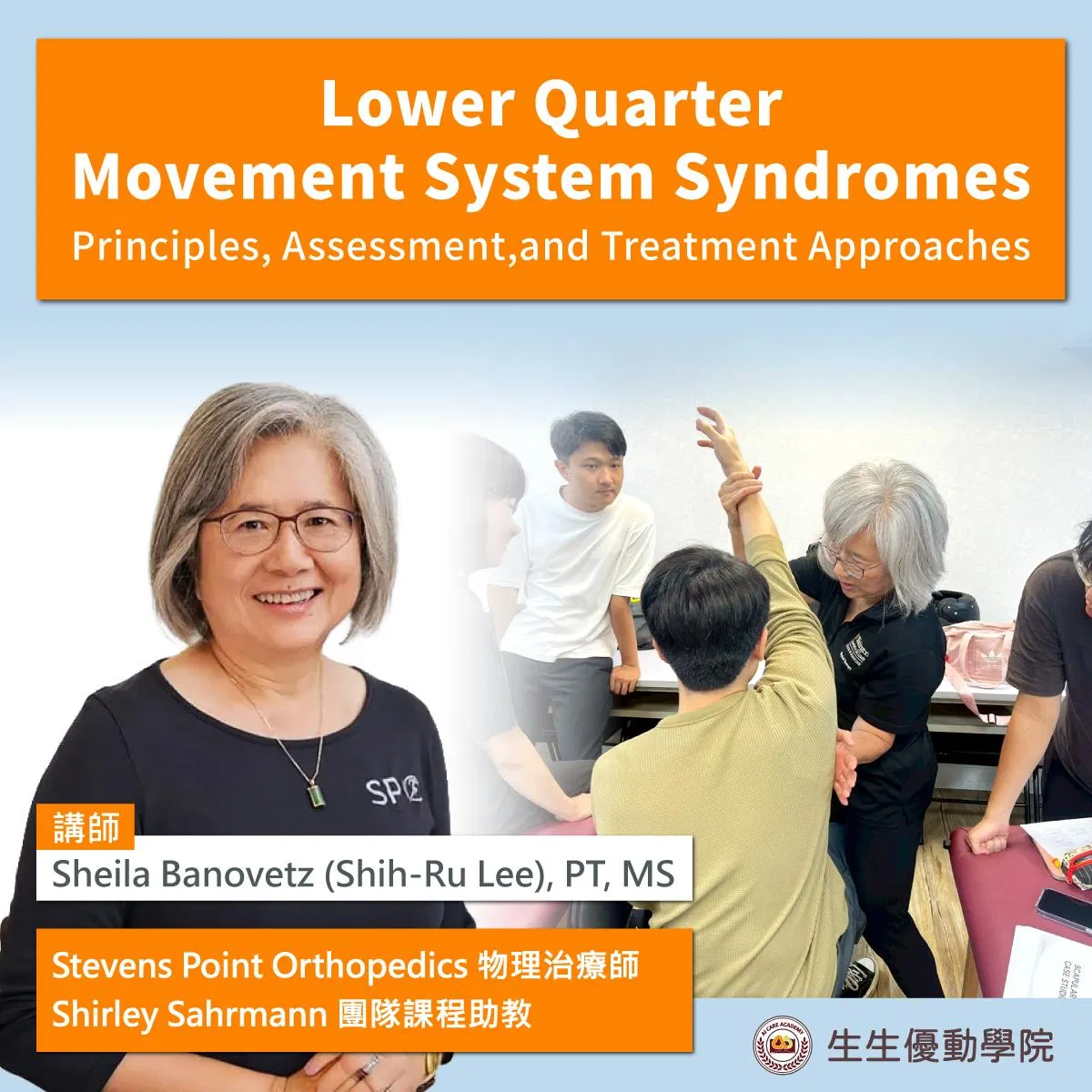
【實體課程_已截止】2026/4/1(三)-4/2(四)Lower Quarter Movement System Syndromes Principles, Assessment, and Treatment Approaches

課程簡介課程要點關於講師常見問題
【實體課程_已截止】2026/4/1(三)-4/2(四)Lower Quarter Movement System Syndromes Principles, Assessment, and Treatment Approaches
共有 28 位學員參與此課程

本課程包含以下內容:

課程長度約 14 小時

課程簡介

  • 課程日期:115年4月1日(三)至4月2日(四) 09:00至17:00
  • 課程時間:上午09:00 至 下午17:00
  • 課程地點生生優動學院教室 (台北市中正區福州街10號2F)
  • 物理治療師繼續教育學分:14學分 (申請中)
  • 主辦單位:臺灣創新健康照護協會、生生優動學院
  • 報名資格:物理治療師
  • 招收名額:30位(額滿為止)

課程介紹:
This two‑day course offers comprehensive instruction in the kinesiopathologic model, emphasizing the relationship between movement and pathology. Participants will learn the theoretical framework underlying movement system syndromes (MSS), with focused coverage of the most common MSS affecting the lumbar spine and hip, including the dynamic interactions between these regions.

The program features live demonstrations of examination procedures, clinical reasoning for diagnosis, selection of targeted corrective exercises, and strategies for modifying movement patterns during daily activities, work tasks, and fitness routines. Multiple lab sessions will provide supervised practice of examination techniques and hands-on guidance in synthesizing test findings to establish an accurate diagnosis.
Throughout the course, facilitated discussions will highlight how diagnostic conclusions and examination results inform effective, evidence‑based treatment planning.

  • 課程目標:
    • Explain the kinesiopathologic model and its relevance to understanding movement‑related contributors to musculoskeletal pain.
    • Define and apply the concepts of relative flexibility, relative stiffness, and motor learning as key determinants of an individual’s path of least resistance during movement.
    • Identify the most common movement system syndromes of the lumbar spine and hip, including typical contributing factors and patterns of impairment.
    • Conduct and interpret a systematic examination of the lumbar spine and hip, utilizing standardized tests to inform clinical reasoning.
    • Integrate examination findings to develop an evidence‑informed treatment plan, with particular emphasis on optimizing task performance and correcting movement patterns.
  • 備註:若報名人數未達最低開課人數,課程將取消,主辦單位將另行通知報名者。

課程要點

Introduction to Principles and Concepts

Review of Low Back and Lower Extremity Musculature

Lab: Standing Tests

Lab: Sitting Tests

Lumbar Diagnosis

Lab: Supine Tests

Lab: Sidelying Tests

Hip Diagnosis

Lab: Prone tests

Femoral Diagnosis

Lab: Quadruped Tests

Demonstration: Live Examination (Volunteer)

Treatment Strategies

Questions and Wrap up